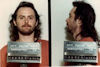
 Darrell E. Crider was a violent American criminal whose name became associated with a series of murders and robberies across the United States during the mid-1980s. His crimes attracted national attention because of the number of jurisdictions involved, the apparent randomness of some of his victims, and the difficulty investigators faced in tracking a transient offender who frequently moved from state to state. Although accounts of his total number of victims vary, investigators eventually connected Crider to multiple murders and believed he could have been responsible for many more.
Crider's known criminal career is particularly disturbing because transportation and money appear to have played an important role in his crimes. According to statements attributed to his younger brother, Russell Crider, Darrell would sometimes hitchhike, gain the confidence of people who gave him rides or shelter, and then rob them of their cars, money, or credit cards. In some cases, these encounters ended in murder. A contemporary report described authorities as investigating at least five murders involving gay men in Louisiana, Florida, Arizona, and New Mexico.
The Shreveport Murder
One of the most important crimes connected to Darrell Crider occurred in Shreveport, Louisiana, in January 1985. Crider and his younger brother Russell were accused of brutally beating a gay bartender to death and stealing approximately $4,500. The killing resulted in murder warrants for the two brothers and launched a major manhunt for Darrell.
The Shreveport case was significant because it helped investigators begin assembling a larger picture of Darrell's activities. Russell was eventually arrested in Las Vegas along with Darrell's girlfriend, while Darrell himself remained at large. During questioning, Russell reportedly provided information about his brother's activities and movements.
According to investigators quoted in later accounts, Russell told police that Darrell preferred traveling alone but sometimes had a companion. He allegedly hitchhiked across the country, obtained rides from strangers, and then robbed the people who helped him. Investigators believed some of these encounters had resulted in murder. At the time, Darrell was reportedly wanted or being investigated for murders in several states, including Florida, Georgia, Louisiana, Colorado, and Arizona. Robbery warrants had also been issued in California, Nevada, New Mexico, Texas, and Colorado.
The Shreveport killing therefore became more than a single homicide investigation. It was one piece of a much larger investigation into a man who appeared to have been moving across the country while committing robberies and, according to prosecutors and investigators, killing some of his victims.
The Arizona Murder
Another murder attributed to Crider occurred in Tucson, Arizona. According to Detective Gary Alderman of the Shreveport Police Department, Crider killed a man after the victim's roommate had allowed him to stay at the residence for the night. The circumstances were consistent with the broader pattern investigators were developing: Crider could use someone's willingness to provide shelter or assistance as an opportunity to gain access to that person before robbing or killing them.
The Tucson murder was especially important to investigators because it suggested that Crider's victims were not necessarily people he had known for long periods. Instead, some encounters could develop rapidly. A stranger might offer a ride, companionship, or a place to sleep, only to become the target of a robbery.
This apparent pattern made Crider particularly difficult to track. Unlike a murderer whose crimes were concentrated in one community, he could disappear into another state after a killing. Vehicles stolen from victims also let him keep moving, while stolen credit cards and cash helped him stay mobile.
The Michael Sims Case
One case associated with Crider involved Michael Sims, a 22-year-old Englishman traveling in the United States. Sims had been visiting relatives in Albuquerque, New Mexico, and was driving toward Denver when his journey ended in Trinidad, Colorado. His body was discovered at a motel in September 1985.
A contemporary United Press International report identified Crider as the prime suspect in Sims's killing. The local district attorney reportedly believed Sims had been killed by strangulation, and investigators said Crider was believed to have been involved in at least six similar deaths at that point.
The Sims case illustrates the investigation's geographic scope. Crider was no longer simply a suspect in a Louisiana homicide. Authorities in Colorado were examining whether the same man was responsible for violence involving travelers in the Southwest and elsewhere.
The case also highlighted the uncertainty surrounding the investigation. Because Crider traveled extensively, investigators in different states had to determine whether apparently unrelated killings were connected. A murder in Colorado might initially appear to have nothing to do with a homicide in Louisiana or Arizona. Only information about the suspect's movements, stolen vehicles, witnesses, and methods could potentially reveal the connection.
The Glenn Reitz Murder
Perhaps the most controversial case connected to Darrell Crider is the 1985 murder of Glenn Reitz, a respected junior-high-school teacher in Madera, California.
Reitz was found murdered in his home in March 1985. His death remained unsolved, but investigators eventually examined Crider as a possible suspect. One reason was that Reitz's stolen Toyota Celica was later located in Louisiana near Shreveport. Investigators also learned that Crider had been in California around the time of the murder and had reportedly been traveling with a younger male.
Additional similarities also drew investigators' attention. Crider was suspected of targeting gay men, often in connection with robbery and transportation. Reitz was a gay man, although his sexual orientation was not widely known in his community at the time.
Despite these similarities, it is important to emphasize that Crider was never convicted of Reitz's murder. Madera police never interviewed him about the homicide, according to later reporting, and the case remains officially unresolved. Detective Gary Alderman nevertheless believed Crider should not be ruled out.
This distinction is crucial. The Reitz murder is often discussed in accounts of Crider because the circumstances appear to fit some aspects of his known criminal pattern, but suspicion is not the same as proof.
The case also demonstrates how difficult it can be to investigate crimes committed by mobile offenders. By the time investigators discovered potential connections between Reitz's murder and Crider, the suspect was already imprisoned elsewhere. Physical evidence, jurisdictional boundaries, and the investigative technology available in the 1980s all presented obstacles.
A Possible Larger Victim Count
One of the most disturbing aspects of the Crider investigation was the possibility that the officially known murders represented only part of his activity.
Shreveport Detective Gary Alderman reportedly believed Crider might have killed considerably more people than the murders for which he was convicted or formally charged. In later reporting, Alderman estimated that Crider could have been responsible for approximately fifteen killings and said he continued to wonder whether Crider was involved in unsolved murders of transient victims from the same period.
Later accounts have placed the possible number even higher. One retrospective account describes a total of nineteen suspected victims, while also identifying additional murders in which Crider was considered a suspect rather than a convicted perpetrator.
These numbers should therefore be treated carefully. There is a major difference between murders for which Crider was convicted, murders for which prosecutors had evidence sufficient to charge him, and unsolved killings in which investigators merely considered him a suspect.
That uncertainty is part of what makes the case so compelling. A serial offender can leave behind a much larger shadow than the number of crimes that can ultimately be proved in court.
The Manhunt
After the Shreveport murder, police spent more than a year searching for Darrell Crider. He eventually ended up in California, where he was arrested for the robbery of a drugstore in Loma Linda.
Crider reportedly used the false name "Steven Dana Williams." He pleaded guilty to the robbery and was facing a relatively short sentence when authorities discovered his true identity and learned that he was wanted in connection with homicide investigations in multiple states.
The arrest was a turning point. A robbery that initially appeared to be an ordinary criminal case revealed the identity of a fugitive wanted in a nationwide murder investigation.
His use of an alias demonstrates another reason he was difficult to apprehend. Traveling between states, using different identities, and committing crimes against people who often had little connection to him allowed him to remain difficult to trace.
Convictions and Imprisonment
Crider ultimately received a life sentence in Louisiana for murder. Later accounts also state that he was convicted of murder in Florida and Arizona. He was subsequently associated with additional murder investigations and indictments in other states.
His imprisonment did not end the unusual story surrounding him. In January 1999, Crider escaped from Louisiana State Penitentiary at Angola with three other prisoners. According to Prison Legal News, the escapees used two smuggled handguns, took a prison maintenance worker hostage, and fled the prison grounds in a truck. Authorities recaptured three of the four escapees within hours.
The escape illustrates how dangerous authorities continued to consider Crider even after he had been imprisoned.
Understanding the Victims
The story of Darrell Crider should not be reduced to the mythology surrounding a serial killer. At the center of the case were individual people who lost their lives.
Many of the victims described in accounts of the investigation were vulnerable in different ways. Some were travelers. Some encountered Crider while offering transportation or shelter. Others were apparently targeted in circumstances involving sexuality, companionship, or the availability of money and vehicles.
The fact that several victims were gay men is particularly significant historically. These murders occurred during the 1980s, when gay people in many parts of the United States faced substantial stigma and discrimination. Some victims may have been reluctant to disclose personal information to authorities, while investigators themselves were operating in an era when attitudes toward homosexuality could influence police investigations.
The Glenn Reitz case illustrates this problem especially clearly. Later reporting argued that fear surrounding Reitz's sexual orientation may have affected the investigation and his willingness to report an earlier robbery.
Conclusion
Darrell Crider's criminal history is a disturbing example of how a mobile violent offender could operate across state boundaries before modern investigative technology made interstate information sharing easier.
His confirmed and alleged crimes stretched across a wide geographical area, including Louisiana, Arizona, Florida, Colorado, and California. The January 1985 Shreveport murder was particularly important because it brought investigators' attention to a pattern of robberies and killings associated with Crider. The Arizona and Colorado cases further expanded the investigation, while the murder of Glenn Reitz remains an unresolved case in which Crider was investigated but never convicted.
The precise number of people killed by Darrell Crider remains uncertain. Contemporary investigators suspected that the number could have been much higher than the murders that could be proven in court. Detective Gary Alderman reportedly believed there were additional victims, while later accounts have suggested totals approaching twenty.
Ultimately, the Crider case demonstrates the difference between suspicion and proof. Some murders resulted in convictions; others produced charges or strong investigative leads; and still others remain theories. Treating all of them as established facts would distort the historical record.
What can be said with confidence is that Darrell Crider was a convicted murderer whose crimes were part of a violent period of interstate criminal activity in the United States. His movements, aliases, robberies, and suspected murders challenged law-enforcement agencies across numerous states. His eventual capture ended his ability to continue killing freely, but it did not resolve every homicide investigators believed might have been connected to him.
For that reason, the story of Darrell Crider remains not only a story about a convicted killer, but also about the many unanswered questions left behind by a series of murders that crossed state lines. Most importantly, it is a story about the victims whose lives were taken and whose cases helped reveal the dangerous pattern surrounding one of the more obscure but troubling murder investigations of the 1980s.