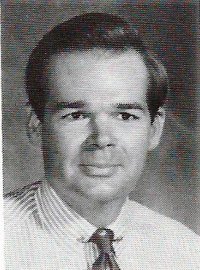
 MADERA - The murder of Glenn Reitz in Madera, California, remains one of the Central Valley's most disturbing unsolved homicide cases. Reitz was a 35-year-old English teacher at Thomas Jefferson Junior High School, well known to his students and colleagues. On March 19, 1985, he failed to appear for work, something that was highly unusual for him. When school officials went to check on him, they discovered that Reitz had been brutally murdered inside his home. More than four decades later, questions remain about who killed him and why. The investigation produced numerous leads, several competing theories, and evidence suggesting that his killer may have traveled across state lines. However, no person has been conclusively identified or convicted for Reitz's murder.
Reitz lived only about half a block from the school. His close proximity to his workplace made his unexplained absence particularly noticeable. On Tuesday, March 19, 1985, he did not arrive at school. Principal Benny Barsotti became concerned because Reitz had not called for a substitute or otherwise explained his absence. Barsotti went to Reitz's home to check on him. Reitz's 1976 Toyota Celica was not in the driveway, which initially suggested he might have simply left the house. However, Barsotti went around to the backyard and looked through a window. What he saw caused him to contact police.
Madera police officers arrived shortly afterward. Because the doors were locked, officers entered through the rear of the house. Inside, they found Reitz's body near the front door. He was nude and had suffered severe injuries. A bath towel covered his body, and investigators discovered blood throughout portions of the house. The crime scene indicated that a violent struggle had taken place. Police opened a homicide investigation under case number C85-552.
Investigators worked to reconstruct Reitz's final hours. Detectives Dale Padgett and David Foster examined telephone records, interviewed witnesses, and attempted to establish a timeline for the period immediately preceding the murder. According to a later review of the police reports, investigators were able to account for much of Reitz's activity during the final two days of his life, although they could not determine with certainty who was inside his house when he was killed.
One important part of the investigation involved Reitz's private life. Police discovered evidence that he had visited establishments in the Fresno area associated with the gay community. This information became significant because investigators considered whether Reitz might have met his killer through people he encountered socially. A later account of the police investigation reported that Captain Andrew Moore found receipts from an adult video store and contacted employees who recognized Reitz as a customer there and at nearby bars.
This discovery also created a complicated social context for the investigation. In 1985, homosexuality was still heavily stigmatized in many communities, particularly in more conservative areas of California's Central Valley. Reitz had apparently kept this part of his life private from many people who knew him. Some family members reportedly did not know about it. Consequently, investigators had to examine relationships and activities that may not have been visible to Reitz's coworkers, students, or family.
One of the most significant developments in the case occurred after Reitz's death. Investigators eventually connected his missing Toyota Celica to Louisiana. In April 1985, a burned vehicle was discovered in a gravel pit near Arcadia, Louisiana. Investigators reportedly found a portion of a license plate associated with Reitz with the burned vehicle. Several years later, in 1988, investigators found Reitz's Toyota Celica in the same general region of Louisiana. The vehicle had apparently been abandoned for years. These discoveries suggested that the person who took Reitz's car traveled a considerable distance after the murder.
The Louisiana evidence became especially important because investigators were also looking at crimes committed in other states. One theory that developed was that Reitz could have been the victim of a traveling or serial killer. A Louisiana investigator named Gary Alderman reportedly believed that Darrell E. Crider, who was imprisoned for another 1985 murder, could have been connected to Reitz's death. Crider had reportedly targeted men at truck stops and stolen their cars or money. Investigators also noted similarities between the Louisiana homicide and the way Reitz's body had been left.
The theory concerning Crider is intriguing but must be treated carefully. The available reporting does not establish that Crider was legally determined to have murdered Reitz. Instead, it presents a theory based on similarities between crimes, vehicle movements, and the activities of a suspected traveling killer. The Reitz homicide itself remains unsolved. Thus, connecting Crider to Reitz's death remains an investigative hypothesis rather than a proven fact.
Another important clue involved credit cards reportedly belonging to Reitz. According to an account of the case, his cards were used in Arizona and Texas after his death. Investigators obtained information about a possible suspect and developed a composite drawing. The drawing generated numerous tips, including suggestions that it resembled a man from Madera who was living in Texas. Police investigated that possibility, but the man established that he was not in the Madera area at the relevant time.
The investigation produced a frustrating pattern: police repeatedly found clues, but they did not lead to a prosecutable suspect. Investigators investigated and cleared a person resembling the composite. The discovery of Reitz's car in Louisiana demonstrated that his vehicle had traveled far from California, but did not establish who drove it. The discovery of the partial license plate near a burned vehicle provided another important connection, but again did not identify the murderer.
Over the years, several theories emerged concerning what happened. One theory was that Reitz had been killed by a transient or traveling criminal who encountered him through the gay social scene and murdered him for money, transportation, or another personal motive. The movement of his vehicle toward Louisiana supports this theory. The possibility that Reitz's killer was a person passing through the area would also help explain why investigators could not identify a local suspect.
A second theory focused on someone from Madera. Rumors circulated that Reitz might have been involved with a local married man or part of a private social circle involving other men. According to later reporting, some people believed that a local person might have had a personal motive for killing him. However, these ideas were largely theories and rumors rather than conclusions established by evidence.
A third possibility was that Reitz knew his killer through his private social life. Because investigators learned that he sometimes met men through bars and other establishments, it was possible that he had brought someone into his home who later became violent. The intimate nature of the crime scene made this theory difficult to dismiss. At the same time, there was no publicly established evidence identifying a particular person as the killer.
Investigators also briefly considered whether Reitz's death might be connected to another unsolved murder. In 1985, the FBI examined a possible connection between Reitz's killing and the murder of Helle Olsbro, a Danish exchange student who was killed in Yosemite. There were similarities in the violence involved, and a witness reportedly believed she had seen Reitz and Olsbro together. However, the available evidence did not establish a connection between the two murders, and Olsbro's killing also remained unsolved.
The case did not disappear entirely after the initial investigation. Former Madera detective Dale Padgett reportedly continued reviewing the case even after he retired in 2004. Later, Detective Robert Salas reportedly examined the case as well. A 2017 review of the police file stated that investigators still had theories about who might be responsible.
The passage of time, however, creates enormous challenges for solving a case from 1985. Witnesses' memories become less reliable, physical evidence can deteriorate, and people who might have possessed important information may die or become difficult to locate. At the same time, advances in forensic science can sometimes allow investigators to reconsider evidence that could not be effectively analyzed decades earlier. DNA technology, computerized databases, and improved methods of comparing evidence could potentially provide new opportunities in an old homicide.
The murder of Glenn Reitz is therefore more than an unsolved crime from the past. It is also a reminder of how difficult homicide investigations can be when the identity of a killer is unknown and when important aspects of a victim's life were kept private. Reitz was a teacher, mentor, athlete, and member of his community. His death shocked people who knew him, particularly his students and colleagues.
Ultimately, the central mystery remains unchanged: who killed Glenn Reitz on or about March 18–19, 1985, and why? The evidence points in several directions. His missing vehicle eventually appeared in Louisiana, his financial accounts reportedly generated activity outside California, and investigators considered the possibility of a traveling killer. At the same time, theories involving local relationships and people from Reitz's private life have never completely disappeared.
Despite decades of investigation, no definitive answer has emerged. The serial-killer theory remains possible but unproven, just as the local-killer and personal-relationship theories remain possibilities rather than established facts. What can be stated with confidence is that Glenn Reitz was brutally murdered in his Madera home in March 1985 and that the investigation never produced a conviction for his killing. His case remains a haunting example of an unsolved Central Valley homicide—and a reminder that behind every cold case is a person whose life ended violently and whose loved ones have been left without a final answer.